
[Pro Tips] Launching Your Watch Brand: A Guide to Selecting the Perfect Movement
If you’re about to launch your own watch brand, you know that design and concept are key. But there’s another choice that is just as critical: the watch’s “movement.” As the very “heart” of the watch, the movement dictates everything from its precision and price point to the core identity of your brand.

“I know the names quartz and mechanical, but what’s the real difference?”
“Which one is better suited for the brand I want to build?”
You’re not alone. These are the exact questions many new brand founders ask. The good news is that once you understand the unique traits of each, the ideal choice for your brand will emerge.
In this guide, our team of watch OEM experts will break down the essential decision of choosing a movement. We’ll compare your options from three crucial viewpoints to help you succeed: Cost, Maintenance, and Brand Image.
First Things First: What’s the Difference Between Quartz and Mechanical?
The fundamental difference between the two lies in their power source—what makes them tick.
Quartz
Powered by a battery. A battery sends an electrical signal through a quartz crystal, causing it to vibrate at a precise frequency. This signal then drives a motor that moves the hands.
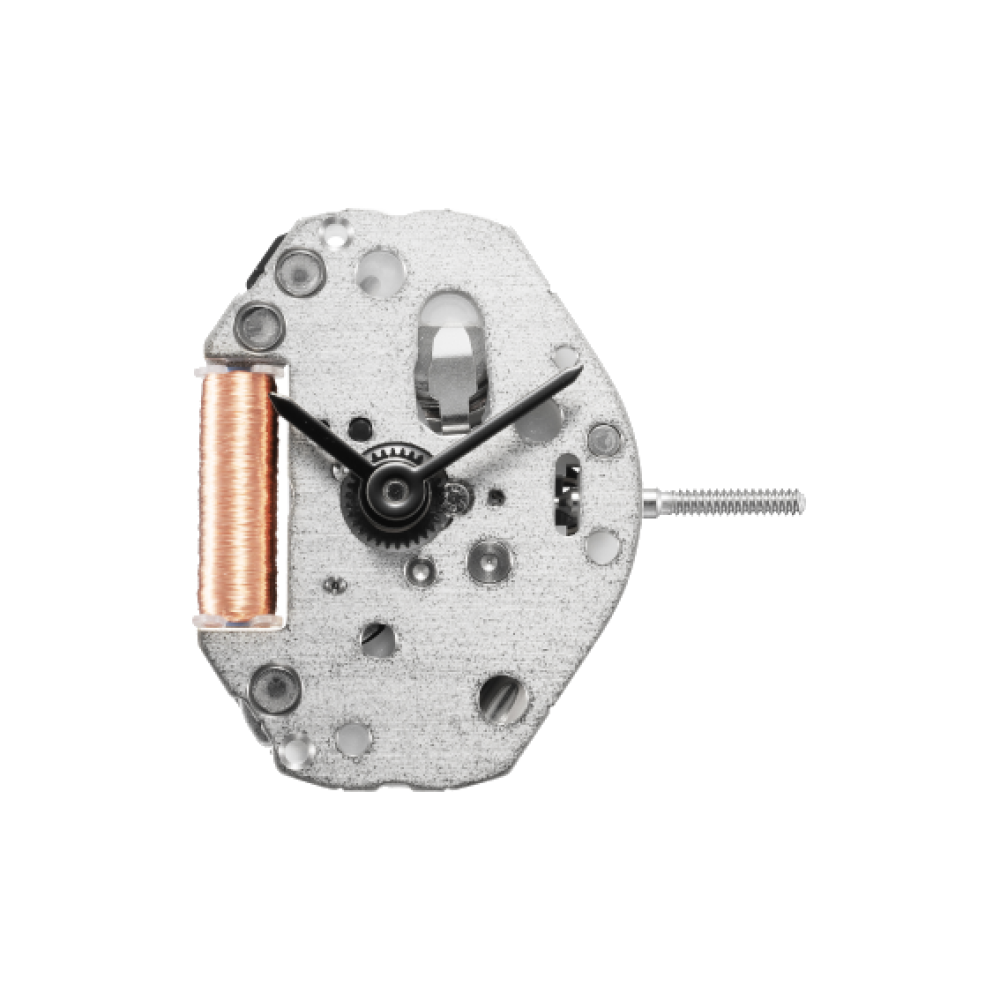
Cal.2025 A standard two-hand quartz movement.
Mechanical (Automatic)
Powered by a mainspring. Energy is stored in the mainspring, which is wound either manually by turning the crown or automatically by a rotor that spins with the wearer’s motion. As the mainspring unwinds, it releases energy that powers the gears and moves the hands.
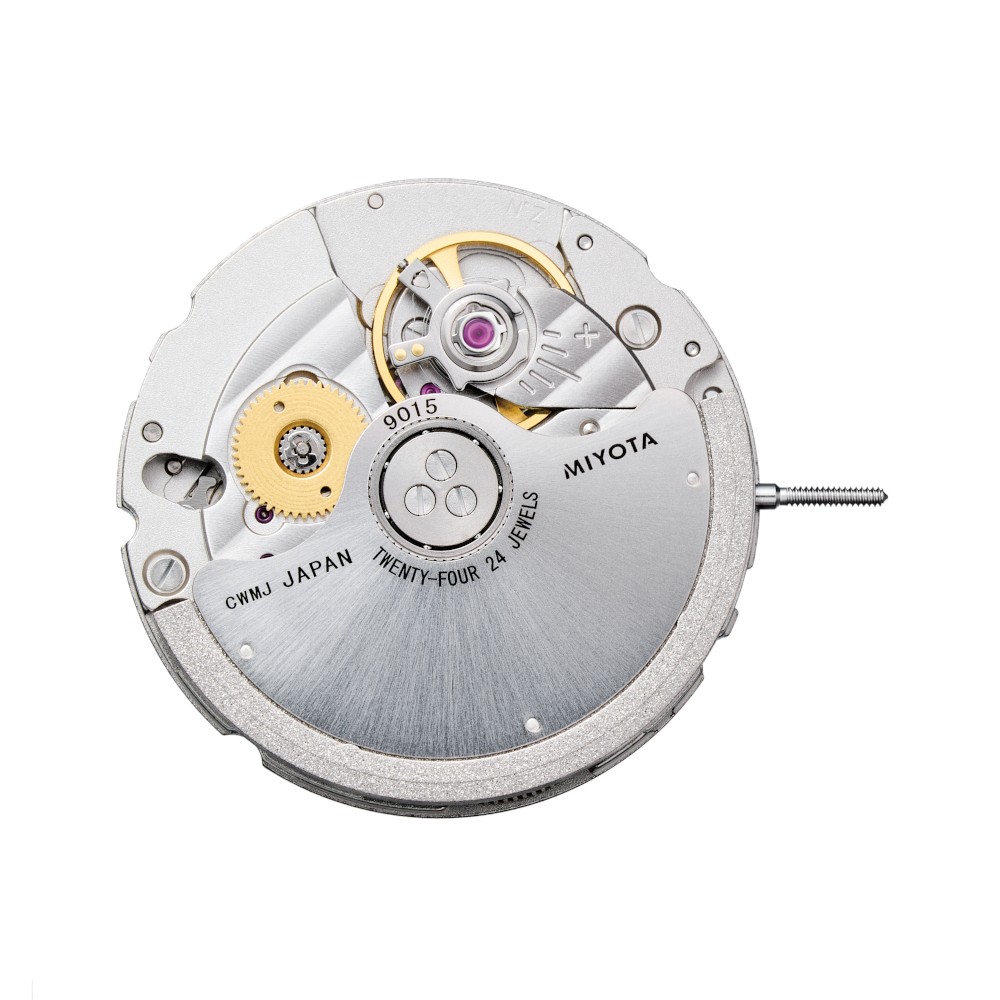
Cal.9035 A slim, premium mechanical movement.
reference : https://miyotamovement.com/jp/
The Big Comparison: Which is Right for Your Brand?
For any brand’s business plan, cost is one of the most critical factors.
| Quartz | Mechanical (Automatic) | |
| Pros | Thanks to their simpler construction, quartz movements are ideal for mass production and are inexpensive to source. This keeps your production costs low and allows you to set an accessible retail price, reaching a broader customer base. | Every component holds intrinsic value, justifying a higher price point. This allows you to build a high-profit-margin business model by enhancing the product’s perceived and actual value. |
| Cons | 資They are rarely seen as long-term assets. To sell at a higher price point, you must add significant value through unique design, premium materials, or other features. | With numerous intricate parts, their assembly and regulation require skilled craftsmanship, making the movements themselves expensive. This leads to higher initial production costs. |
Recommended for Brands That…
Quartz is a great fit if you:
- Want to keep your initial investment low.
- Want to compete on fashion-forward and unique designs.
- Are targeting a younger demographic (e.g., 20s-30s).
Mechanical is your best choice if you:
- Aim to be a high-quality, premium brand for true enthusiasts.
- Can use the movement itself as a key selling point.
- Can create designs that showcase the movement (e.g., open-heart or exhibition case backs).
This point directly impacts customer satisfaction long after the sale.
| Quartz | Mechanical (Automatic) | |
| Pros | Their biggest advantage is incredible accuracy (typically within ±15-20 seconds per month). They are also shock-resistant, and maintenance is simple—usually just a battery change every few years. This means a hassle-free experience for your customers. | With regular overhauls (a deep cleaning and servicing), a mechanical watch can theoretically last a lifetime, or even longer. This allows you to build an emotional narrative around your brand, like “an heirloom to pass from one generation to the next.” |
| Cons | The electronic circuit has a finite lifespan (generally around 10 years). When it fails, repair is often impossible, requiring a full movement replacement. | Accuracy is lower than quartz, with a daily deviation of anywhere from a few seconds to several dozen. They are also more vulnerable to shocks and magnetic fields. A full overhaul is recommended every 3-5 years, which represents an ongoing maintenance cost for the customer. |
【Recommended for Brands That…
Quartz is a great fit for:
- Brands that prioritize accuracy and convenience for their customers.
- Brands targeting the second-watch or gift market.
Mechanical is your best choice for:
- Brands wanting to build a “buy it for life” concept.
- Brands targeting serious watch enthusiasts and collectors.
- Brands that can establish a solid after-sales service system.
A movement isn’t just a component; it’s the narrative your brand shares with the world. It’s what you stand for.
| Quartz | Mechanical (Automatic) | |
| Key Selling Points | • Modern & Stylish • High Design Freedom • Advanced Functionality (e.g., chronographs) • Casual & Fashion-Forward | • Tradition & Heritage • Artisanal Craftsmanship • Status & Asset Value • The Romance of a Living Machine |
| Target Audience | Appeals to a broad audience, including trend-conscious individuals, design-focused consumers, and business professionals who value practical functionality. | Deeply resonates with a niche audience that values authenticity: dedicated watch enthusiasts, individuals expressing a unique personal style, and those seeking a special, commemorative timepiece. |
So, Which Story Will You Tell?
Quartz is perfect for:
- Fashion-first brands, such as those launched by apparel companies, where the watch is an accessory.
- Brands building a minimalist and sophisticated image.
- Brands that want to create ultra-thin and sleek timepieces.
Mechanical is the choice for:
- Brands that emphasize the story behind their creation, such as the founder’s passion or a unique history.
- Brands committed to offering classic, timeless value that transcends trends.
An Extra Insight: The Heart of Reliability—Japanese vs. Swiss Movements
The movements used in OEM manufacturing primarily come from two powerhouses: Japan and Switzerland. Both are synonymous with quality, but they offer different strengths for your brand.
- Japanese Movements (e.g., MIYOTA, Seiko): Their greatest appeal is their unbeatable value and proven reliability. The fact that they are trusted and used by countless brands worldwide speaks volumes about their dependability. They are the perfect choice for brands that want to deliver an exceptional product at a fair and honest price.
- Swiss Movements (e.g., ETA, Sellita): The allure here is the powerful brand cachet that comes with the words “Swiss Made.” Their exquisite finishing and time-honored design principles capture the hearts of watch aficionados. For brands aiming to build an image of “authentic luxury” or “horological excellence,” a Swiss movement is a strategic and powerful asset.
Bringing It All Together: What Is the Core Value You Want to Offer?
As we’ve seen, there’s no single “right” answer when choosing between quartz and mechanical. It’s not about which is better—it’s about which is better for you.
Choose Quartz if your mission is to deliver design, accessibility, and outstanding value to a broad audience.
Choose Mechanical if your passion is to share story, heritage, and the profound joy of ownership with a discerning audience.
We specialize in listening carefully to our clients’ brand concepts and budgets to propose the perfect movement from the countless options available. If you’re feeling stuck on this decision, see it as an opportunity—a chance to truly define your brand’s unique character.
Tell us about the watch you dream of creating.
Let us put our deep knowledge and experience to work, offering our full support to your brand-building journey.